New refinery proposal tests the price of fuel security
Australia’s push to investigate a third oil refinery reflects how geopolitical instability is changing the economics of fuel security.
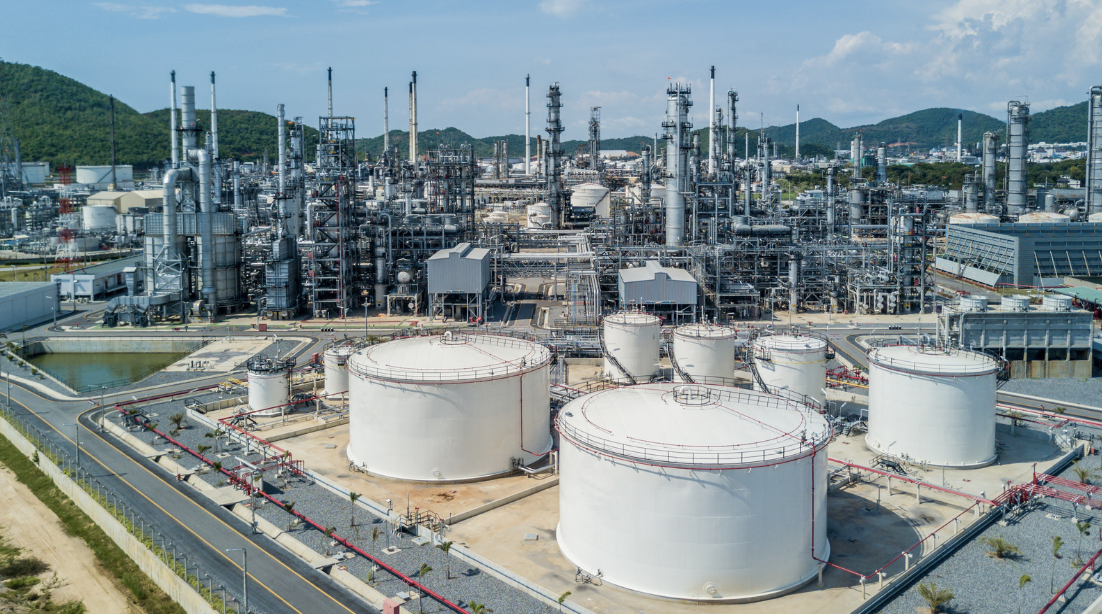
Australia’s push to investigate a third oil refinery reflects how geopolitical instability is changing the economics of fuel security. The federal and Western Australian governments will fund a $4 million pre-feasibility study into a facility proposed by Perdaman, which could become the country’s first new refinery since the 1960s, with the potential to create thousands of jobs and support mining, agriculture, transport and regional communities, although no final investment decision has been made.
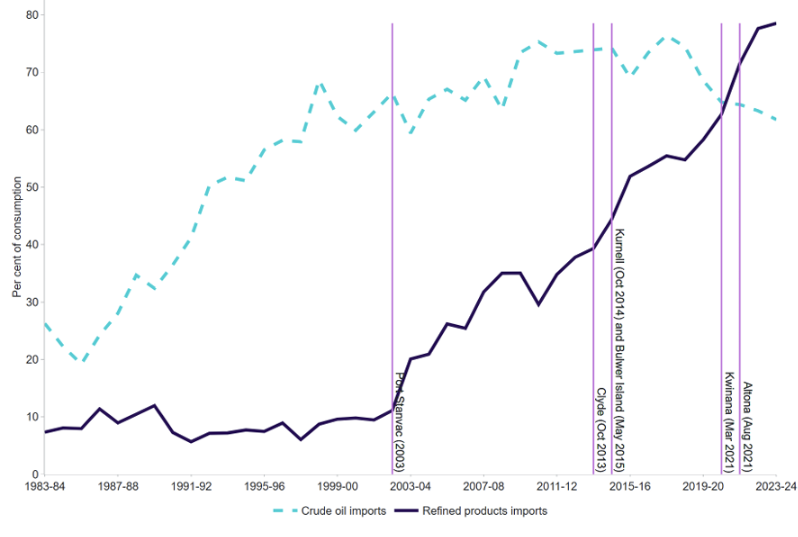
The strategic case is clear, as Australia has only two operating refineries, at Geelong and Lytton, leaving Western Australia thousands of kilometres from domestic refining capacity. Figure 2 demonstrates our current reliance on imported fuel, which supplied 79% of consumption in 2023–24, rising sharply as local plants closed. A new refinery could shorten regional supply chains while generating construction work and ongoing demand for engineers, technicians, maintenance workers and logistics staff. Recent supply disruption has also increased the value governments place on domestic capacity, even where it costs more than imported fuel.
The commercial case is much less certain, as Australia’s remaining refineries have previously required government support to remain open, demonstrating the difficulty of competing with larger Asian facilities. Analysts estimate a new plant could cost billions and warn it would probably still rely on imported crude, limiting the improvement to energy independence, while electrification and lower-emissions fuels could reduce long-term petroleum demand. The study must therefore determine whether strategic resilience and regional employment justify paying a premium for domestic production. Construction could deliver a short-term jobs boost, but lasting benefits depend on a commercially sustainable operation rather than permanent subsidies. Under ordinary conditions, the economics may be unconvincing, however the rise of persistent geopolitical uncertainty may increase the value of establishing such insurances against disruption.
Like what you’re reading?
Contact us for more information, insights, or to share your thoughts regarding this article.