New gender pay data highlights persistent gap among top earners
The Workplace Gender Equality Agency (WGEA) has released its latest data on the gender pay gap from 2024-25, finding modest improvements compared to previous years.

The Workplace Gender Equality Agency (WGEA) has released its latest data on the gender pay gap from 2024-25, finding modest improvements compared to previous years. The WGEA Employer Gender Pay Gaps Report, which uses data from 10,500 employers covering 5.9 million employees, found that Australia’s gender pay gap is now 11.2%. This is down 0.9% from last year, meaning that on average, for every $1 a man is paid, a woman is paid 88.8 cents.
The slight improvement in these figures is largely attributable to higher pay rises received by low-income workers and lower pay rises received by high earners. This is because, as seen in Figure 2 below, despite gender representation being almost equal in the data, women make up a far larger proportion of low-income workers, compared to men who are almost twice as likely to be in the highest quartile of earners. Pay rises for low-pay workers (such as in the form of minimum wage increases) are disproportionately beneficial to women, causing the wage gap to decline. The decline, however, does not point to any meaningful improvement in the equality of income distribution, which is key to further progress.
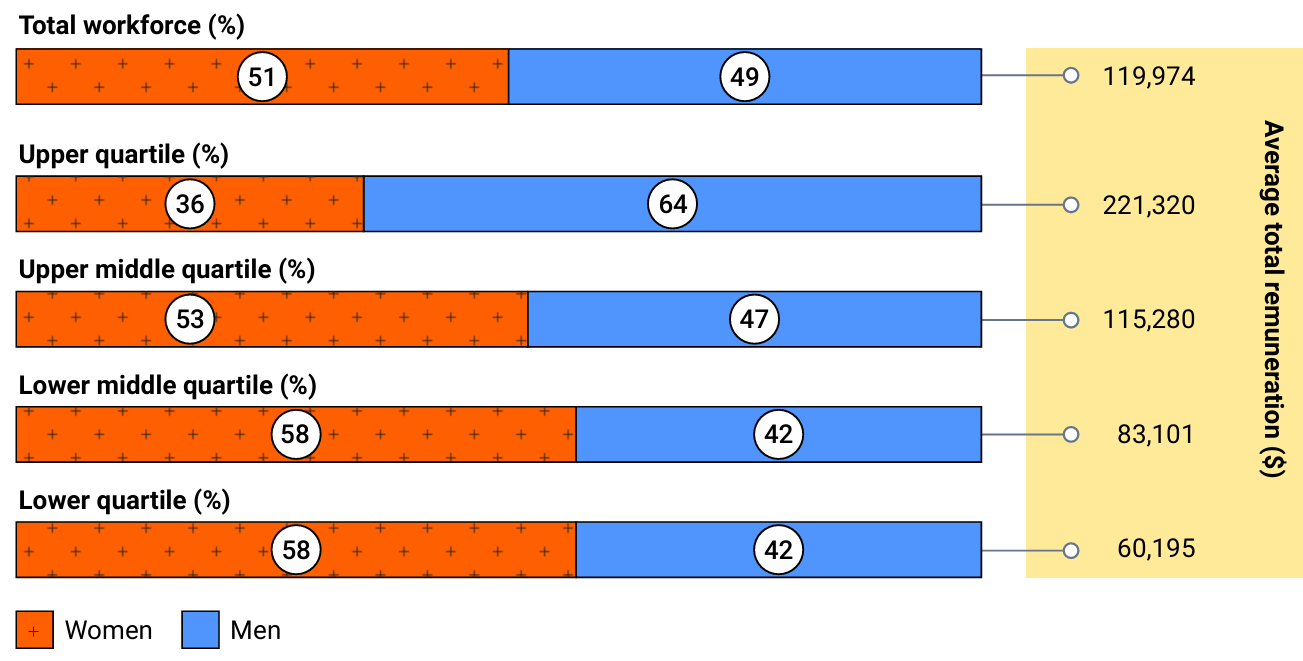
Another area of significant gender based disparity is bonuses, with men receiving almost 30% more in bonuses on average. This aligns with the fact that the highest paying industries, such as investment banking, demonstrate some of the largest gender-based remuneration disparities. The data makes it clear that for the gender pay gap to improve, more women are needed in roles that not only include higher base pay, but also more bonus remuneration. This may require more effort (particularly in the private sector) to encourage greater female representation in executive roles. This will be key not just for immediate reductions in income disparities, but also for paving the way for future generations of leaders and establishing a longer-term path forward towards equity.
Like what you’re reading?
Contact us for more information, insights, or to share your thoughts regarding this article.