How student visa costs could alter Australia’s skills pipeline
Australia’s international student settings are becoming more restrictive, raising questions over what role international students could serve as part of Australia’s economy and labour market.

Australia’s international student settings are becoming more restrictive, raising questions over what role international students could serve as part of Australia’s economy and labour market. Higher visa rejection rates, rising application charges and falling commencements have combined to make entry more difficult and expensive. Student visa refusals reportedly reached a 20-year high earlier this year, while from 1 July the Student Visa Application Charge rose to $2,500 and the Temporary Graduate visa charge increased to $5,750. At the same time, international student commencements are already tracking lower, down 8% on the same period in 2025 and 13% below 2019 levels.
International students already sit deeply within Australia’s education, migration and employment systems. Student visa holders can generally work up to 48 hours per fortnight during study periods, while many graduates use post-study work rights to gain Australian experience and transition into longer-term employment. Jobs and Skills Australia’s International Students Pathways and Outcomes Study demonstrates how international students can contribute to Australia’s skilled workforce, but only where education, visa and employment pathways work together effectively. The study identified significant concerns in this regard, best demonstrated in figure 2 below, illustrating that more than 50% of international graduates working in Australia are employed below their skill level, suggesting the country is not fully converting this pipeline into skilled labour supply.
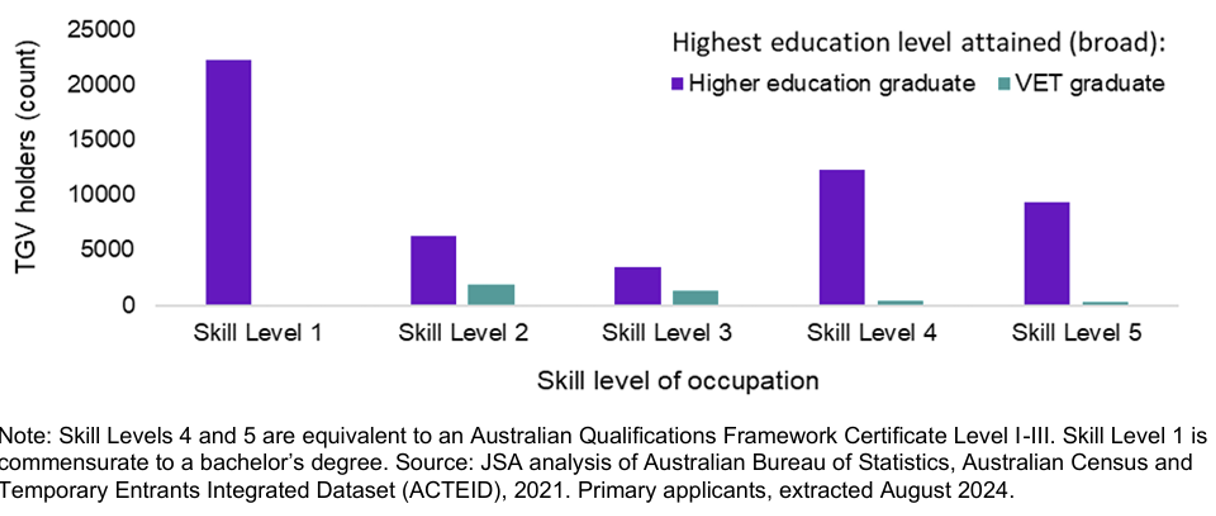
While higher visa fees and enrolment controls may help the government manage migration volumes and sector integrity, they also risk weakening Australia’s appeal to students who could later help fill skill shortages. Jobs and Skills Australia recommends the sector’s objectives should include both its contribution to economic activity and its role in building Australia’s skilled workforce over the medium to long term, suggesting policy should focus more heavily on improving graduate employment pathways given the valuable contribution this could make to Australia’s labour supply.
Like what you’re reading?
Contact us for more information, insights, or to share your thoughts regarding this article.