Cooling labour demand conceals an uneven hiring market
Australia’s hiring market is gradually normalising, but the national figures conceal substantial differences in where positions remain available.

Australia’s hiring market is gradually normalising, but the national figures conceal substantial differences in where positions remain available. Job vacancies fell 0.9% over the three months to August to 325,000, leaving them 31.2% below their May 2022 peak. Yet vacancies remain elevated relative to employment, approximately 2.2 positions per 100 employed people, compared with 1.8 in February 2020. The latest decline therefore represents further easing from exceptional conditions, rather than evidence of a widespread hiring collapse.
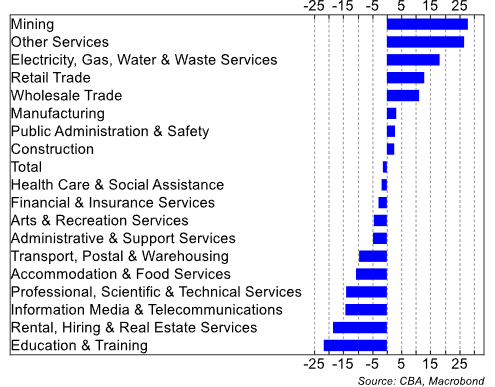
Annual industry comparisons reveal demand moving in different directions, providing a more detailed depiction of the forces influencing labour demand. Figure 1 shows that vacancies increased approximately 28% in mining and 13% in retail, while falling about 22% in education, 19% in rental, hiring and real estate, and 14% in professional, scientific and technical services. Comparing the same month across years reduces the seasonal distortion associated with unadjusted quarterly movements. These differences suggest that recruitment opportunities are becoming less evenly distributed, with some industries offering more openings while others become more competitive for applicants.
The broader labour market can consequently ease without eliminating recruitment challenges. Employment was still growing in August, even as stronger labour-force growth lifted unemployment. A larger national pool of jobseekers does not automatically supply the qualifications, experience or location required by expanding employers. Equally, vacancies measure unfilled positions rather than completed hires, meaning decreases can reflect contraction in demand, less employee turnover or shorter vacancy duration. The industry figures do not identify which explanation dominates. They nevertheless point to more selective opportunity rather than uniformly weaker demand, making industry conditions central to both workforce planning and the broader macroeconomic outlook.
Like what you’re reading?
Contact us for more information, insights, or to share your thoughts regarding this article.